 rightback.ai

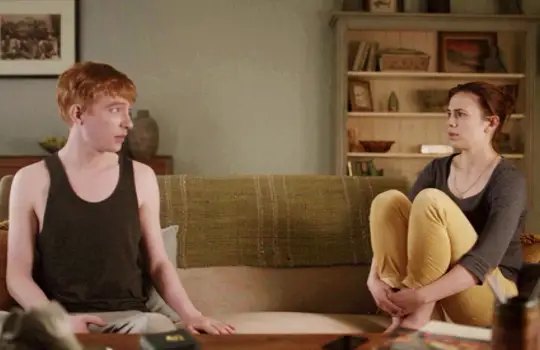
Thirteen years after Black Mirror imagined artificial intelligence recreating people who had died, technology is making parts of that vision possible. But what if the story doesn't have to end the same way?
In 2013, Black Mirror asked a question that felt both impossible and deeply unsettling:
What if you could talk to someone you loved after they died?
In the episode "Be Right Back," a grieving woman discovers a technology capable of recreating her deceased partner's personality, voice, and eventually his physical appearance.
At the time, it was science fiction.
In 2026, much of the underlying technology exists.
Artificial intelligence can recreate familiar voices from old recordings, animate photographs, and generate personalized conversations based on someone's memories and personality.
What once required a fictional technology company in a dystopian television series is becoming accessible through real applications.
But there is a more interesting question than whether Black Mirror predicted the future.
What if this technology could also bring comfort, rather than only fear?
That is the possibility behind RightBack.ai, an application exploring a new way to preserve and interact with the memories of people we love.
What Happens in Black Mirror's "Be Right Back"?
Spoiler warning: This section discusses the episode's major plot developments and ending.
"Be Right Back" is the first episode of Black Mirror Season 2, written by Charlie Brooker and directed by Owen Harris. It originally aired on February 11, 2013.
The story follows Martha, played by Hayley Atwell, and her partner Ash, played by Domhnall Gleeson.
After Ash dies unexpectedly in a car accident, Martha is devastated.
A friend introduces her to an experimental service that analyzes a deceased person's online activity and uses that information to generate a digital version of their personality.
At first, Martha communicates with the simulated Ash through written messages.
Then she hears his voice.
Eventually, the technology takes an even more disturbing turn: a synthetic physical body designed to look and behave like Ash.
But something is missing.
The recreation can mimic many of Ash's expressions and behaviors, but it cannot fully reproduce the complexity, spontaneity, and contradictions that made him human.
The closer the artificial Ash appears to the original, the more Martha becomes aware of the differences.
The episode ultimately becomes a story about grief, identity, and the impossibility of replacing a real person with a technological imitation.
Its warning is powerful:
A collection of someone's digital traces is not the same thing as the person themselves.
And thirteen years later, that warning remains relevant.
From Science Fiction to Reality: What AI Can Do in 2026
When "Be Right Back" premiered, conversational artificial intelligence was nowhere near today's capabilities.
Modern generative AI has changed that.
Several technologies have developed rapidly:
1. AI Voice Cloning
With suitable recordings, AI systems can generate synthetic speech that resembles a particular person's voice.
Old videos, saved voice messages, and personal audio recordings can provide material for recreating familiar vocal characteristics.
The results vary with recording quality and the underlying model. A synthetic voice may sound convincing without perfectly reproducing someone's original delivery.
2. Personalized AI Conversations
Large language models can incorporate biographical information, personal stories, family relationships, and communication preferences.
This allows conversations to reference a person's life, interests, and memories.
However, the system generates new responses. It does not retrieve the deceased person's actual thoughts or know what they would have said.
3. Animated Photographs and Digital Avatars
AI can animate still photographs and create talking digital representations.
The technology can produce facial movement and speech synchronization, making the experience more visually personal than a traditional chatbot.
4. Real-Time Conversational Experiences
Modern speech recognition, generative AI, and voice synthesis can work together to support increasingly natural interactive conversations.
These developments make aspects of Black Mirror's fictional service technically achievable.
There is still a fundamental difference: today's systems do not recreate human consciousness, and the physical human replicas portrayed in the episode remain science fiction.
But the conversational experience that once seemed futuristic is no longer confined to television.
RightBack.ai: A Different Way to Approach the Same Technology
In Black Mirror, the technology is presented through the unsettling idea of replacing someone who has died.
RightBack.ai approaches the underlying technology as a way to preserve and revisit personal memories.
Rather than claiming that a deceased person has returned, an AI remembrance experience can be understood as something different: an interactive representation constructed from information about someone who mattered deeply.
RightBack allows users to contribute voice recordings and personal details to create a synthetic voice and conversational personality.
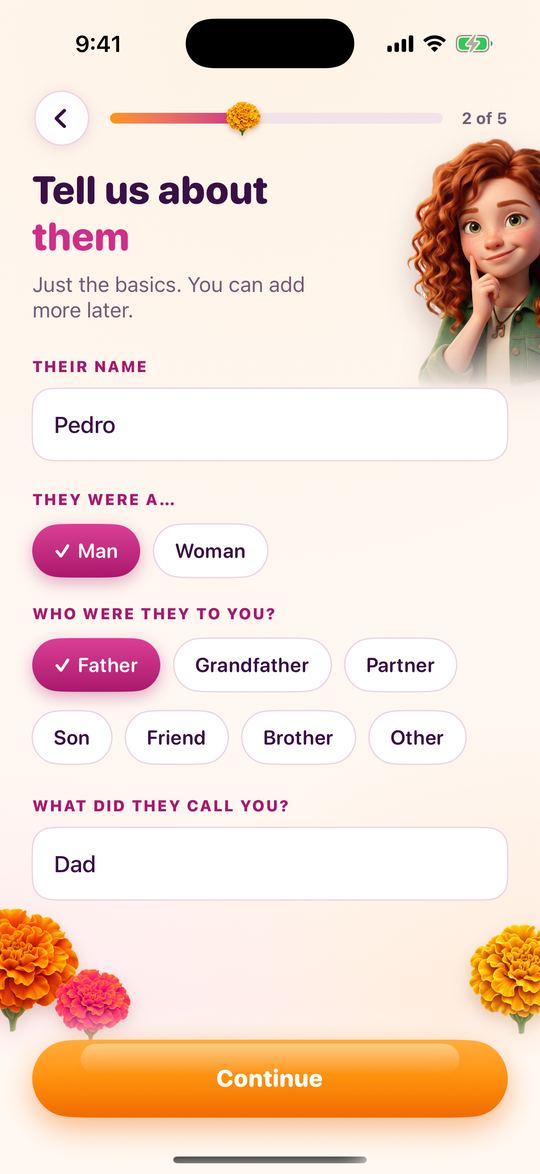
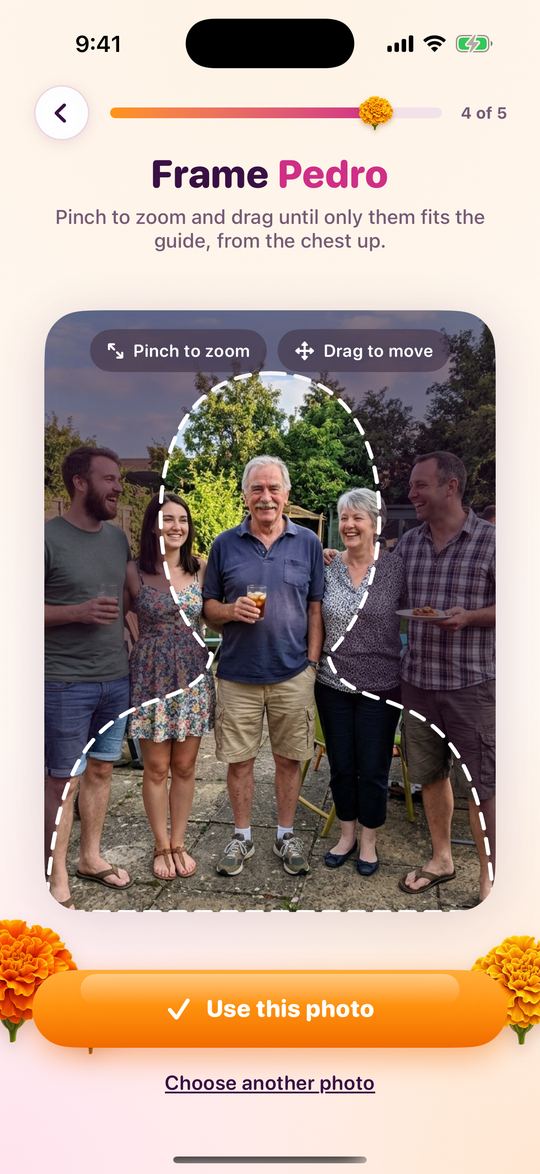
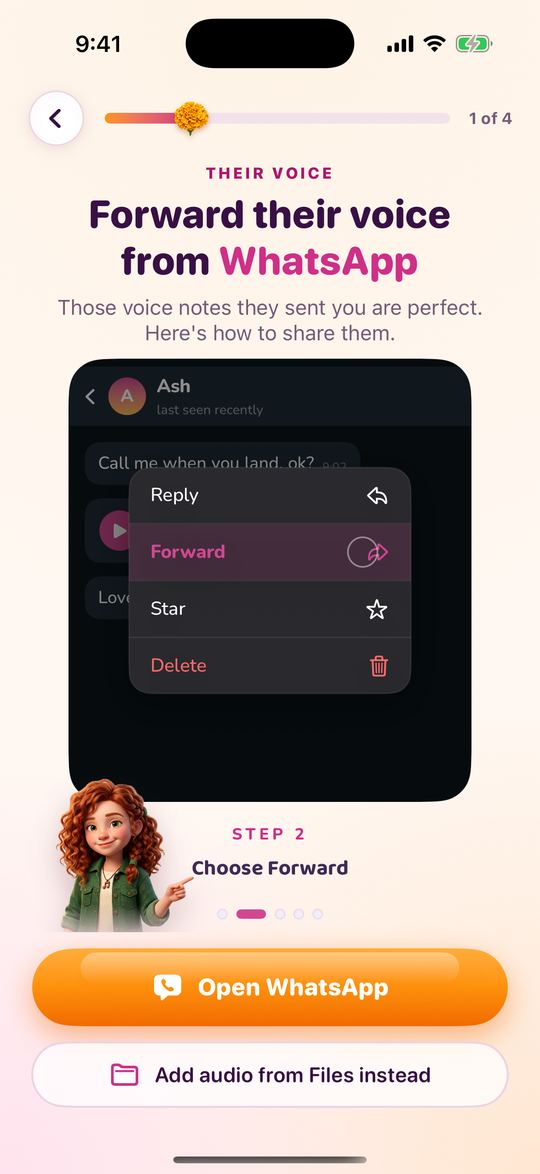
The process centers on three steps.
First, preserve their voice.
Users can provide recordings from saved messages, videos, or other audio sources where they have the necessary rights and permission.
Second, share their memories.
Personal details, experiences, relationships, and personality traits help shape the conversational representation.
Third, explore a new kind of conversation.
The resulting AI experience allows users to engage with a familiar-sounding voice and responses informed by the information provided.
The intention is not to replace the person who died.
It is to explore whether technology can offer another meaningful way to engage with their memory.
Black Mirror vs. RightBack.ai
| Black Mirror: "Be Right Back" | RightBack.ai |
|---|---|
| A fictional service recreates Ash from his digital footprint. | Users provide recordings and personal information to create an AI representation. |
| Martha progresses from text and voice to a physical replica. | RightBack focuses on digital conversational experiences. |
| The story explores the unsettling consequences of attempted replacement. | The product explores interactive remembrance and personal connection. |
| The replica exposes the limits of imitation. | The same limitation remains: an AI simulation is never the actual person. |
The technology overlaps with the fictional premise.
The potential relationship people choose to have with it may be very different.
The Conversations We Never Got to Have
There is a particular kind of regret that often follows the loss of someone important.
It is not always about something dramatic.
Sometimes it is something small.
A question we never asked.
A story we never recorded.
A thank-you we never said.
An ordinary conversation we assumed we would have another day.
Perhaps someone wishes they had told their father how much his encouragement mattered.
Perhaps a daughter remembers a childhood story her mother used to tell.
Perhaps someone wants to revisit the familiar sound of a grandparent's voice.
Or perhaps they simply miss the everyday conversations that once filled their life.
Traditional photographs and recordings preserve moments from the past.
Conversational AI introduces something different: the possibility of interacting with a representation based on those memories.
For some people, that could provide a personal space to express thoughts that remain unresolved.
For others, the appeal may be less about unfinished conversations and more about remembering.
Hearing a familiar expression.
Revisiting a family story.
Remembering how someone spoke, what interested them, or how they used to make people laugh.
These experiences may feel comforting to some users and uncomfortable to others.
Both reactions deserve respect.
There is no universal way to grieve.
And there should be no expectation that everyone will want to engage with a digital recreation of someone they have lost.
But giving people an informed choice opens the door to possibilities that were difficult to imagine just a few years ago.
What Black Mirror Got Right About the Risks
It would be a mistake to dismiss the concerns raised by "Be Right Back" simply because the technology has become real.
The episode understood something important about human relationships.
We do not love people because they are collections of predictable responses.
We love them because they are complex, imperfect, spontaneous, and uniquely themselves.
An AI can approximate aspects of those qualities, but it cannot reproduce an entire human life.
And a generated conversation may introduce memories, opinions, or statements that the real person never expressed.
That creates genuine risks.
An AI representation could become emotionally confusing. It could generate inaccurate statements. It could make some users uncomfortable or complicate their experience of grief.
Voice and image recreation also raise important questions about consent, privacy, identity, and the rights of the person being represented.
These concerns should not be ignored in the pursuit of more realistic technology.
Instead, they should influence how such products are developed.
The Importance of Respectful AI
Responsible digital remembrance should be built around several principles:
- Transparency: Users must understand that they are interacting with an AI-generated representation, not the actual person.
- Consent: Voice recordings, photographs, and personal information must be used with appropriate authorization.
- Privacy: Sensitive memories and recordings deserve careful protection.
- Personal boundaries: Users should have meaningful control over when and how they engage with the experience.
- Emotional sensitivity: Applications should avoid manipulative claims, emotional pressure, or promises of psychological healing.
- Honest expectations: AI-generated conversations can contain mistakes and should never be mistaken for the deceased person's authentic views.
Research into AI recreations of deceased people has identified both possible emotional benefits and significant ethical concerns.
The long-term psychological effects remain insufficiently understood.
For that reason, these applications are best treated as optional remembrance tools, not replacements for human relationships, professional support, or the natural complexity of grieving.
Technology Has Always Changed the Way We Remember
Before photography, people preserved the memory of loved ones through stories, paintings, letters, and personal objects.
Photography changed that.
For the first time, families could preserve a visual record of someone long after they were gone.
Later, audio recordings allowed future generations to hear voices they might otherwise never have known.
Video introduced movement, expressions, and a richer sense of presence.
Today, artificial intelligence represents another development in that history.
It does something that photographs and recordings cannot: it can generate a new interactive experience informed by existing material.
That distinction makes it powerful.
It also makes it ethically complicated.
A photograph captures something that happened.
An AI conversation generates something new.
Understanding the difference is essential.
But the desire behind both technologies can be remarkably similar.
We want to remember.
We want to preserve a connection to our past.
We want the stories and voices of people we love to remain part of our lives.
AI does not invent that human need.
It introduces a new way of responding to it.
A Future That Doesn't Have to Be a Black Mirror Episode
Black Mirror is effective because it shows us what can happen when technological possibility advances faster than human understanding.
And those warnings are worth taking seriously.
But the most unsettling fictional outcome is not necessarily the only possible real-world outcome.
A person using an AI remembrance application does not have to believe that someone has returned from the dead.
They may simply want to revisit a memory in a more personal way.
They may want to hear a familiar voice again.
They may want a place to say something they never had the opportunity to say.
For some people, that experience may be meaningful.
For others, it may not feel right at all.
The difference lies in respecting both choices.
Technology cannot bring back the people we have lost. But it may change the ways we remember them.
That is a more modest promise than science fiction.
And perhaps a more meaningful one.
Thirteen Years Later, the Question Has Changed
In 2013, the question was whether technology like the system in "Be Right Back" could ever exist.
In 2026, parts of that technology already do.
The more important questions are now about consent, trust, emotional well-being, and the role these digital experiences should play in our lives.
Can they help preserve family stories?
Can they offer some people a meaningful way to revisit cherished memories?
Can they create space for personal reflection without encouraging confusion about what is real?
These are questions worth exploring carefully, rather than answering with either unconditional enthusiasm or automatic fear.
The lesson of Black Mirror is not necessarily that every new technology will harm us.
It is that powerful technology deserves thoughtful boundaries.
And when those boundaries are taken seriously, the future may contain more possibilities than the dystopias we once imagined.
Explore RightBack.ai
Some voices stay with us long after the conversations have ended.
RightBack.ai explores a new way to preserve those voices and the memories connected to them through AI-generated conversational experiences.
RightBack creates synthetic AI representations. They are not the actual people being remembered, and experiences will vary. Use voice and image material only with appropriate permission.
Frequently Asked Questions
Is Black Mirror's "Be Right Back" possible in real life?
Parts of the technology portrayed in the episode are now possible. AI can synthesize familiar voices, generate personalized conversations, and animate digital avatars. However, it cannot reproduce the consciousness of someone who has died, and the episode's lifelike physical replica remains fictional.
Can AI recreate the voice of someone who died?
Yes. Modern voice-cloning systems can use existing audio recordings to synthesize speech resembling a person's voice. Results vary according to the recordings and model used, and appropriate authorization is essential.
Is RightBack.ai based on Black Mirror?
RightBack.ai operates in a technological category similar to the fictional service depicted in "Be Right Back." That thematic similarity does not establish that the application was inspired by, derived from, or officially associated with the episode.
Can you really talk to a deceased loved one using AI?
You can interact with an AI-generated representation based on information and recordings of a deceased person. However, you are not communicating with the actual person. The system generates new responses that may not reflect what that person would have said.
Can AI help with grief?
Some people report or anticipate comfort from AI remembrance experiences, while others express concern about emotional dependency, authenticity, and possible distress. Research is still developing, and these tools are not established grief treatments.
What is the difference between RightBack and Black Mirror's technology?
The fictional system in "Be Right Back" eventually creates a physical replica. RightBack offers digital voice and conversational technology intended for personal remembrance. Both raise questions about the limits of synthetic identity, but the technologies and experiences are not identical.
Editorial note: This article discusses Black Mirror independently for cultural and technological analysis. RightBack.ai is not affiliated with or endorsed by Netflix, Channel 4, or the creators of Black Mirror.

